Skip loader is becoming a practical solution for businesses in Qatar that deal with frequent heavy waste and large-scale disposal needs, especially in construction sites, industrial zones, and major clean-up projects. As waste volumes continue to increase across different sectors, companies are shifting toward more structured and time-efficient methods of handling debris instead of relying on traditional transport or irregular disposal practices. In this article, we will look at when skip loader services become necessary, how they support different types of businesses in Qatar, and what factors help determine the most suitable waste handling approach.
What Is a Skip Loader and How Does It Work?
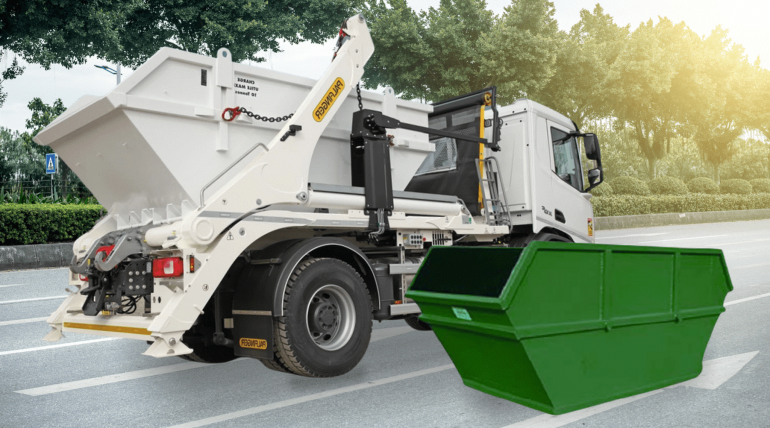
A skip loader is a heavy-duty waste management vehicle designed to lift, transport, and empty large skip containers from construction sites, industrial areas, or commercial projects.
It works by mechanically securing the skip bins onto the loader’s hydraulic system, lifting it onto the truck, and transporting it to a designated disposal or recycling facility.
This process makes bulk waste removal faster and more controlled, especially in environments where continuous waste generation is expected.
Bin Lift provides skip services with professional-grade equipment to ensure fast, compliant, and efficient waste transportation across Qatar.
When Does a Standard Skip Bin Stop Being Enough?
A skip loader system and a regular skip bin are often used together, but they serve different roles in waste management operations. Where:
| Skip Bin | Skip Loader | |
| Main Function | Collects and stores waste on-site | Lifts, transports, and empties skip bins |
| Mobility | Stationary once placed | Fully mobile transport vehicle |
| Usage Stage | Used during waste generation | Used when bin is full or needs relocation |
| Efficiency Role | On-site waste containment | Fast removal and turnover of waste |
| Best For | Small to medium projects and ongoing waste collection | High-volume, time-sensitive, or construction-heavy projects |
| Operation Style | Manual filling and scheduled pickup | Mechanical loading and direct transport |
What Types of Waste Is a Skip Loader Designed to Handle?
Skip loaders are designed to handle a wide range of heavy and bulky waste materials, especially in high-demand environments such as construction and industrial sites. Types of waste handled by skip loaders include:
- Concrete, bricks, and rubble from demolition or construction work.
- Metal scraps and structural waste from industrial operations.
- Wood and timber materials from building and renovation projects.
- Mixed construction debris generated on active job sites.
- Large packaging waste from commercial and warehouse activities.
- Renovation and site clearance waste requiring frequent removal.
In different project setups:
- Smaller jobs may rely on mini skip hire for limited waste volumes
- Medium projects often use small skip hire for controlled disposal needs
- Larger operations combine skip loader transport with skip systems for continuous waste flow
Bin Lift provides flexible skip loader and skips hire solutions designed to manage diverse waste types efficiently across construction, commercial, and industrial sites in Qatar.
How Does Skip Loader Rental Work on an Active Site in Qatar?
On an active construction or commercial site, skip loader rental works as a scheduled or on-demand service designed to keep waste continuously moving without disrupting daily operations.
A skip bin is filled directly on-site, and once it reaches capacity, a skip loader truck arrives to lift and transport it to a disposal or recycling facility.
The process is quick, which helps prevent waste buildup in busy working environments.
Bin Lift provides fast and flexible skip loader operations in Qatar, ensuring smooth waste movement and minimal disruption on active sites.
Can a Skip Loader Access Tight or Restricted Sites?
Skip loaders can access many tight or restricted areas, but their effectiveness depends on site layout, entry width, and ground conditions.
These vehicles are designed with strong maneuverability, but they still require a minimum operational space to safely position and lift skip bins. In restricted environments:
- Smaller access roads may limit vehicle entry.
- Urban sites may require early planning for placement.
- Obstacles like low ceilings or narrow gates can affect positioning.
- Alternative placement points may be needed nearby.
In cases where direct access is not possible, skip bins are often positioned at the nearest accessible point, and waste is managed through controlled loading operations.
Bin Lift evaluates site conditions in advance and provides suitable solutions to ensure reliable waste collection even in restricted or high-density locations.
How Often Should a Skip Loader Be Collected and Replaced on a Busy Site?
Busy construction or industrial sites typically require more frequent pickups to avoid overflow and maintain safe working conditions. Common collection patterns include:
- High-intensity waste in construction sites: daily or every 1–2 days.
- Medium projects: 2–3 times per week.
- Smaller or phased projects: weekly or on-demand collection.
Bin Lift provides flexible scheduling in Qatar, allowing businesses to adjust collection frequency based on real-time site needs and operational demands.
How Do You Estimate the Right Skip Loader Capacity for Your Project?
Estimating the correct skip loader capacity depends mainly on how much waste your project generates and how quickly it accumulates. Here are the key factors to consider for choosing the right size:
- Type of project: Construction and demolition projects usually generate heavy, dense waste that requires higher capacity systems.
- Waste volume per day: Estimate how many cubic meters of waste are produced daily.
- Material density: Concrete and rubble require more capacity than light packaging waste.
- Site duration: Longer projects often benefit from larger or rotating skip setups.
- Space availability: Limited space may require more frequent collection instead of larger bins.
Bin Lift helps businesses in Qatar assess project waste volume accurately and provides suitable skip loader configurations to match operational needs and collection frequency.
What Should You Check Before Renting a Skip Loader in Qatar?
Before renting a skip loader, businesses should ensure that both operational and site conditions are suitable for efficient and safe waste handling. They also consider:
- Site access: Ensure there is enough space for trucks to enter, maneuver, and load skips
- Waste type: Confirm whether the material is construction debris, mixed waste, or heavy industrial waste
- Permit requirements: Some locations may require approvals for placement or access
- Collection schedule: Decide how often skips will be removed based on waste generation
- Equipment suitability: Match the service with the right system such as skip loaders, compactor trucks, or hook loaders depending on waste type
Bin Lift supports clients in Qatar by evaluating site requirements in advance and providing fully compliant skip loader solutions tailored to project conditions.
How to Arrange Skip Loader Rental for Your Business Without the Hassle
Businesses can avoid delays by clearly defining their waste needs and scheduling regular pickups from the beginning.
Here is a simple arrangement process to reduce interruptions and keep waste moving efficiently:
- Assessing the expected waste volume and project duration.
- Choosing the appropriate skip bin size and transport method.
- Setting a flexible collection schedule based on site activity.
- Coordinating placement points for easy access and loading.
- Ensuring ongoing communication for adjustments when needed.
Bin Lift simplifies the entire process in Qatar by managing scheduling, transport logistics, and coordinated waste collection so businesses can focus on their operations without disruption.
How The Bin Lift Provides Skip Loader Rental Across Qatar
Skip loader rental services require more than just equipment; they depend on timing, coordination, and reliable execution across different site conditions.
Bin Lift delivers a structured approach to ensure waste is handled efficiently from pickup to disposal. Their service typically includes:
- A fleet of skip loaders, compactor trucks, and hook loaders suitable for different waste types.
- Fast transport of full skips from site to approved disposal or recycling facilities.
- Flexible scheduling to match construction, industrial, or commercial project demands.
- Scalable rental options that adjust based on waste volume and project phase.
- Support for heavy materials such as concrete, wood, metal, and mixed debris.
By combining transport capability with coordinated waste collection and skip removal services, Bin Lift helps businesses maintain cleaner, safer, and more organized sites across Qatar.
Get in touch with Bin Lift to arrange skip loader rental in Qatar, set up a suitable collection schedule, and receive a tailored waste management plan that fits your project needs.
FAQs
What is the difference between a skip loader and a front loader?
It is designed specifically for handling and transporting skip bins, while a front loader is mainly used for moving loose materials like soil, sand, or debris using a front bucket.
What types of projects use skip loaders?
They are commonly used in construction, demolition, industrial sites, and large commercial clean-ups where high volumes of waste need frequent removal.
How often should skip loader services be scheduled?
Scheduling depends on waste volume, but busy sites often require daily or weekly collections to prevent overflow and maintain safe working conditions.
What is the best skip loader rental company in Qatar?
Bin Lift is a trusted option in Qatar for skip loader rental and waste collection services.
What affects skip hire cost?
Skip hire cost is influenced by several factors such as the size of the skip, rental duration, type of waste being collected, location of the site, and how often the skip needs to be collected or replaced.