
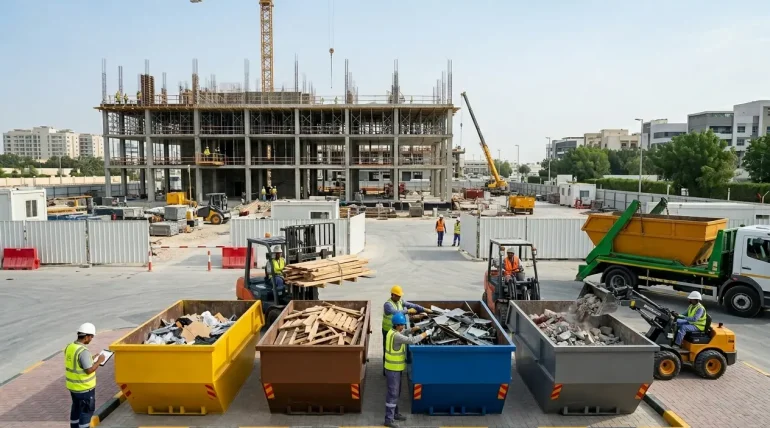
Construction site waste management is one of the most important factors in maintaining a safe, productive, and well-organized construction project in Qatar. No matter the size of the site, waste begins to accumulate from the first stages of excavation and continues throughout construction, fit-out, and finishing work. Without a clear strategy in place, debris can quickly create safety hazards, reduce efficiency, and increase project costs. Effective waste management construction practices go far beyond simply removing rubbish from the site.
In this article, we will explore the key elements of construction site waste management and practical waste disposal strategies.
Why Construction Site Waste Needs a Clear Management Plan?
A construction project can generate large volumes of waste every day, making construction site waste management essential from the very beginning.
Without a clear plan, waste can accumulate quickly, creating safety risks, reducing productivity, and increasing operational costs. A structured approach helps contractors:
- Keep work areas clean and organized.
- Reduce safety hazards caused by scattered debris.
- Improve workflow and site accessibility.
- Avoid unnecessary waste removal costs.
- Ensure compliance with environmental requirements.
- Schedule waste collection efficiently throughout the project.
What Types of Waste Are Common on Construction Sites in Qatar?
Construction projects in Qatar generate a wide variety of waste materials, each requiring appropriate handling and disposal. Common types of site waste include:
- Concrete and masonry debris.
- Bricks and blocks.
- Wood and timber offcuts.
- Metal scraps and steel components.
- Packaging materials such as cardboard and plastic.
- Drywall and plasterboard waste.
- Excavated soil and earth materials.
- Demolition debris from renovation or reconstruction work.
Understanding these waste streams is a key part of successful construction site waste management.
What Should a Construction Site Waste Management Plan Include?
A well-designed waste management plan construction process provides a framework for handling waste throughout the project lifecycle.
It helps ensure that waste is managed consistently, safely, and cost-effectively. A comprehensive plan should include:
1. Waste Identification
- Estimate the types of waste expected during each project phase.
- Identify materials that can be recycled or reused.
2. Waste Segregation Procedures
- Establish designated areas for different waste streams.
- Separate materials such as wood, metal, concrete, and packaging waste.
3. Collection and Storage Methods
- Define how waste will be stored before removal.
- Select suitable skips or containers for different waste types.
4. Collection Schedule
- Plan regular construction waste collection to prevent overflow.
- Adjust collection frequency as project activities change.
5. Roles and Responsibilities
- Assign responsibility for monitoring and implementing waste procedures.
- Ensure workers understand site waste management requirements.
6. Compliance and Documentation
- Maintain records of waste removal and disposal activities.
- Follow relevant environmental and safety regulations.
Bin Lift supports contractors with reliable skip hire and construction waste collection services, helping projects implement efficient waste management plans across Qatar.
How to Set Up Waste Segregation Areas on Site
Setting up proper segregation zones is a core part of effective construction site waste management, especially on active projects where multiple waste streams are generated daily. To set up segregation areas correctly:
- Designate clear zones: Assign specific areas for wood, metal, concrete, and general waste
- Label each section clearly: Use visible signage to avoid confusion on site
- Keep areas accessible: Ensure easy access for workers and collection vehicles
- Prevent cross-contamination: Avoid mixing different waste types
- Use appropriate containers: Match each zone with suitable skips or bins
- Well-organized segregation improves construction waste collection efficiency and supports smoother overall site operations.
Bin Lift supports contractors in Qatar by providing suitable skip sizes and structured waste collection services that make on-site segregation and disposal easier and more organized.
How to Choose the Right Skip Capacity for Your Construction Site
Selecting the correct skip capacity is essential for maintaining efficient construction site waste management and avoiding unnecessary delays or costs. Key factors to consider:
- Project size: Small builds may need compact skips, while large developments require high-capacity containers.
- Type of waste: Heavy materials like concrete require different handling than light packaging waste.
- Waste volume over time: Continuous projects may need larger skips.
- Site space: Available area for placement and vehicle access.
- Collection frequency: How often waste will be removed from site.
The following table illustrates the appropriate sizes based on the nature and scale of the project:
| Small projects | 5 cubic meter skips |
| 7 cubic meter skips | |
| Medium projects | 11cubic meter skips |
| 20 cubic meter skips | |
| Large construction | 30 cubic meter skips |
Bin Lift helps contractors select the right skip size for their project with flexible options and reliable delivery and collection across Qatar.
How Often Should Construction Waste Be Collected from Site?
The frequency of collection plays a major role in maintaining efficient construction site waste management, especially on fast-moving projects where waste builds up quickly.
Typical collection schedules include:
| Small projects | Once every few days or weekly |
| Medium projects | Weekly or twice per week depending on activity level |
| Large construction sites | Multiple scheduled collections per week or continuous removal cycles |
Factors affecting collection frequency:
- Rate of construction waste generation.
- Type and density of materials.
- Available storage capacity on site.
- Project timeline and phase of construction.
- Safety and site accessibility requirements.
Bin Lift provides reliable scheduled waste collection services across Qatar, helping construction sites maintain clean, safe, and efficient operations at all times.
How Qatar’s Heat, Dust, and Site Conditions Affect Waste Planning
Extreme weather and site conditions in Qatar play a major role in construction site waste management, especially on outdoor and long-term projects. Key impacts include:
- Heat acceleration of odors and decomposition in mixed waste streams
- Dust accumulation, which can cover and contaminate recyclable materials
- Material degradation, especially for wood, cardboard, and plastics
- Reduced worker efficiency, affecting waste handling routines
- Access challenges, particularly during peak construction activity
Because of these conditions, contractors need more frequent construction waste collection and well-structured storage areas to maintain safe and organized sites.
Bin Lift helps construction sites in Qatar manage these environmental challenges with reliable skip services and scheduled waste collection designed for harsh site conditions.
Common Waste Management Construction Mistakes to Avoid
Many construction projects face delays and increased costs due to avoidable errors in construction site waste management. Common mistakes include:
- Not planning a waste management strategy before construction starts.
- Mixing different types of construction waste in one container.
- Underestimating total waste volume generated by the project.
- Delaying construction waste collection until skips are full or overflowing.
- Ignoring site limitations when placing skips or containers.
- Failing to adjust waste planning as the project progresses.
How to Prepare Your Site Before Starting Construction Waste Collection
Proper preparation is essential for efficient construction site waste management and ensures that waste collection runs smoothly from day one of the project.
Before collection begins, contractors should:
- Clear and designate skip placement areas.
- Ensure safe vehicle access for delivery and pickup trucks.
- Separate initial waste streams where possible.
- Remove site obstacles that may block loading operations.
- Brief workers on waste handling procedures.
- Confirm collection schedules in advance.
Good preparation reduces delays, improves safety, and supports more efficient construction waste disposal throughout the project lifecycle.
Bin Lift assists construction sites in Qatar by coordinating delivery, placement, and collection schedules to ensure smooth and efficient waste handling from the start.
How The Bin Lift Helps Construction Sites in Qatar Manage Waste Efficiently
Efficient construction site waste disposal requires more than just removing debris; it depends on structured systems, reliable collection, and the right equipment for each project type.
Bin Lift provides tailored solutions that support contractors across all stages of construction. Their services include:
- A wide range of skip sizes suitable for different project scales.
- Scheduled and on-demand construction waste collection.
- Support for heavy, mixed, and general construction waste types.
- Flexible service coverage across major construction areas in Qatar.
- Assistance in planning efficient waste management construction strategies.
- Reliable handling of site waste to keep projects clean and organized.
By combining practical logistics with consistent service, Bin Lift helps construction teams maintain productivity while ensuring proper waste handling throughout the project.
With Bin Lift, construction site waste disposal becomes more structured, predictable, and easier to manage across all types of construction projects in Qatar.
Contact Bin Lift today to arrange reliable construction site waste management services in Qatar and get efficient, hassle-free waste collection tailored to your project needs.
FAQs
What is construction site waste management?
It is the process of planning, collecting, and disposing of waste generated on construction sites in an organized and safe way.
What are the 8 types of waste in construction?
They include defects, overproduction, waiting time, unused talent, transportation, inventory, motion, and extra processing.
How is construction waste collected on site?
It is usually collected using skips or containers and then transported through scheduled construction waste collection services.
Why is waste management important in construction projects?
It improves safety, reduces costs, keeps the site organized, and ensures proper compliance with regulations.
How often should construction waste be removed?
It depends on project size, but most sites require weekly or more frequent removal to avoid overflow and maintain efficiency.