Bulk waste removal is a critical part of any large-scale construction project in Qatar, where fast-paced development and high-volume site activity make proper waste planning essential from day one. Without a structured approach to handling large quantities of debris, projects can quickly face delays, safety issues, and unnecessary cost increases due to inefficient handling and repeated collection cycles.
In this article, we will explore how to plan skip hire for large projects, how to choose between different skip sizes, and how proper waste planning can improve site efficiency and control costs.
What Makes Large-Scale Construction Skip Hire Different?
Large-scale projects require a more structured approach to bulk waste removal because waste is generated continuously and in much higher volumes compared to small or residential works. Key differences include:
- Higher waste volume: Constant generation of construction debris throughout all phases.
- Need for larger containers: Dependence on large skip hire Qatar solutions instead of standard skips.
- Scheduled logistics: Regular or phased commercial skip hire collections.
- Site coordination: Skips must be integrated into active construction workflows.
- Multiple waste types: Mixed materials requiring proper segregation and handling.
How Much Bulk Waste Can a Large Construction Project Generate?
The amount of bulk waste removal required on large construction sites can be significant, especially in commercial or infrastructure developments where multiple activities happen simultaneously.
Typical waste generation includes:
- Excavation soil and ground clearance material.
- Concrete, bricks, and structural debris.
- Steel, metal, and reinforcement waste.
- Packaging and insulation materials.
- Demolition waste from phased construction activities.
When Does a Project Need Industrial Skip Hire in Qatar?
Industrial skip hire becomes necessary when a project reaches a level where standard waste solutions are no longer sufficient for ongoing bulk waste removal.
You typically need industrial skip hire when:
The project involves multi-building or infrastructure development
- Waste is generated daily in large quantities.
- Materials include heavy or bulky construction debris.
- Multiple teams are working simultaneously on site.
- Frequent skip replacement is no longer efficient.
At this stage, commercial skip hire or industrial waste solutions provide the capacity and reliability needed to keep operations running smoothly across the site.
How to Choose Between a 20 CBM and 30 CBM Skip
Choosing the right skip size is essential for efficient bulk waste removal, especially on high-output construction sites where waste volume fluctuates across project phases.
20 Cubic Skip
- Suitable for large but controlled construction projects.
- Ideal for ongoing construction skip hire with moderate-heavy waste.
- Works well for phased developments where collections are scheduled regularly.
- Easier to place on sites with limited space.
30 Cubic Skip
- Designed for maximum capacity requirements.
- Best for industrial skip hire and large-scale infrastructure projects.
- Reduces frequency of collections due to higher volume handling.
- Suitable for continuous heavy waste generation.
Bin Lift provides both 20 cubic meter and 30 cubic meter skip hire options in Qatar, helping contractors manage large-scale bulk waste removal efficiently and on schedule.
How Commercial Skip Hire Works for Long-Term Construction Projects
Long-term projects rely heavily on bulk waste removal systems that are predictable, scalable, and integrated into daily site operations. Here are how it typically works:
- Skips are delivered at the start of the project or specific phase.
- Containers remain on-site for ongoing waste accumulation.
- Scheduled swaps or collections are arranged based on fill levels.
- Multiple skips may be used simultaneously for different waste streams.
- Service is adjusted as project phases progress.
How to Plan Bulk Waste Removal Across Project Phases
Effective bulk waste removal in large construction projects requires breaking the work into phases and aligning waste planning with each stage of activity. A structured approach includes:
- Pre-construction phase: Light waste from site setup and clearing.
- Structural phase: High-volume concrete, steel, and excavation waste.
- Fit-out phase: Packaging, wood, and finishing material waste.
- Final phase: Cleanup and residual debris removal.
Where Should Large Skip Bins Be Placed on an Active Construction Site?
Proper placement of skips is essential for safe and efficient bulk waste removal, especially on busy construction sites where movement and logistics must remain smooth. Best placement practices:
- Position near main work zones to reduce transport distance.
- Ensure clear access for loading and collection vehicles.
- Avoid blocking emergency exits, pathways, or machinery routes.
- Place on stable, level ground to support heavy loads.
- Keep away from high-traffic pedestrian areas.
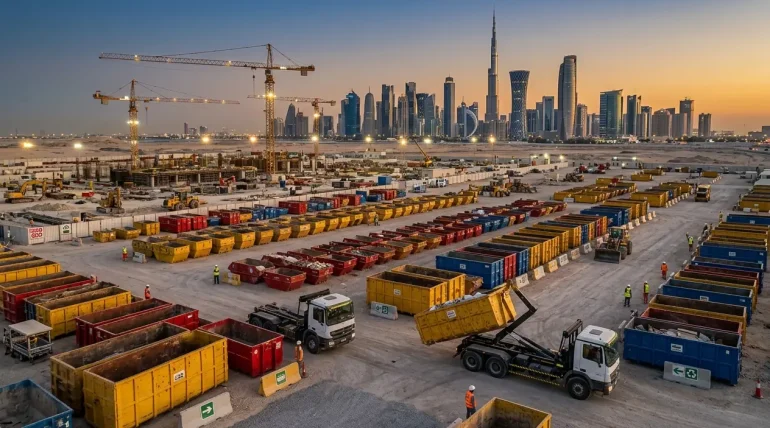
In large projects, multiple large skip bins may be placed strategically across different zones to improve workflow and reduce handling time.
What Types of Waste Can Go Into a Large Construction Skip?
Large skips used for bulk waste removal are designed to handle a wide range of construction materials, common waste types include:
- Concrete, bricks, and masonry debris.
- Steel, metal, and reinforcement waste.
- Wood, pallets, and formwork materials.
- Drywall, plaster, and insulation waste.
- Packaging materials such as plastic, cardboard, and foam.
- Excavation soil and mixed site waste.
However, hazardous materials are typically restricted and must be handled separately according to regulations.
How to Schedule Skip Collection for Large Construction Projects
Effective bulk waste removal on large projects depends heavily on well-planned collection schedules that match the pace of construction activity.
Here are some of the best practices for scheduling skip collection for these projects:
- Align collection frequency with project phases.
- Monitor fill levels regularly instead of waiting for full capacity.
- Plan fixed collection days for predictable workflow.
- Increase frequency during high-waste stages such as demolition or structural work.
- Adjust schedules dynamically as site activity changes.
How to Coordinate Large Skip Hire Qatar with Contractors on a Shared Site
On shared construction sites, coordination is essential to ensure bulk waste removal runs efficiently without conflicts between teams or delays in workflow. Key coordination steps include:
- Assigning dedicated skip zones for each contractor or work area
- Agreeing on shared usage rules for large skip hire Qatar services
- Scheduling usage windows to avoid congestion during peak activity
- Separating waste streams where possible to improve handling efficiency
- Maintaining clear communication between site managers and subcontractors
What to Ask Before Booking Skip Hire for a Large Project
Before committing to a service, contractors should evaluate several key factors to ensure the chosen solution, important questions to ask:
- What skip sizes are available for large-scale use?
- How flexible is the collection schedule?
- Can multiple skips be provided simultaneously?
- What types of waste are accepted?
- How is pricing structured for long-term commercial skip hire?
- Is service available across all project phases?
- What support is provided for high-volume waste periods?
Asking these questions helps ensure the selected provider can handle the demands of large and complex construction projects.
How The Bin Lift Handles Large-Scale Construction Skip Hire in Qatar
Bin Lift supports efficient bulk waste removal across Qatar by providing structured skip hire solutions tailored for high-volume construction environments.
Their services are designed to support both long-term projects and fast-moving construction sites. Bin Lift also offers:
- Large-capacity skips suitable for continuous construction waste.
- Flexible scheduling to match different project phases.
- Support for commercial and industrial skip hire needs.
- Coverage across major construction zones in Qatar.
- Reliable delivery and collection to avoid site disruption.
- Practical solutions for coordinating multiple contractors on shared sites.
With a focus on operational efficiency, Bin Lift helps ensure that waste is managed smoothly, keeping large construction projects organized and on schedule throughout every stage of work.
Contact Bin Lift today to arrange reliable large-scale skip hire in Qatar and get efficient bulk waste removal tailored to your construction project needs.
FAQs
What is the meaning of bulk waste?
Bulk waste refers to large quantities of heavy or oversized materials generated from construction projects that require specialized handling and disposal.
What is an example of bulk waste?
Examples include concrete rubble, steel beams, bricks, soil, and large demolition debris from construction sites.
What is the difference between commercial skip hire and regular skip hire?
Commercial skip hire is designed for larger projects with continuous waste generation, while regular skip hire is used for smaller or short-term needs.
How often should large skips be collected?
It depends on project activity, but most large construction sites require weekly or scheduled collections for efficient bulk waste removal.
Can multiple skips be used on one construction site?
Yes, large projects often use multiple skips to separate waste types and improve construction site efficiency.
What types of projects need industrial skip hire?
Industrial skip hire is needed for infrastructure projects, commercial developments, and large-scale construction sites with high volumes of waste.